Why Neutral Paint Colors Matter When Preparing Your Home for Sale
When homeowners prepare a property for the market, paint is often one of the first improvements recommended and for good reason.
A buyer may be able to imagine replacing furniture or changing décor, but bold paint colors can make it harder for them to picture themselves living in the home. Deep purples, bright reds, dramatic accent walls, stripes, murals, and highly personalized colors can immediately make a room feel like it belongs to someone else.
That doesn’t mean those colors were a bad choice while you lived there. Your home should reflect your personality while it’s your home.
But when it becomes a listing, the goal changes.
Now the house needs to appeal to the largest possible group of buyers.
Why Neutral Colors Work Better for Listings
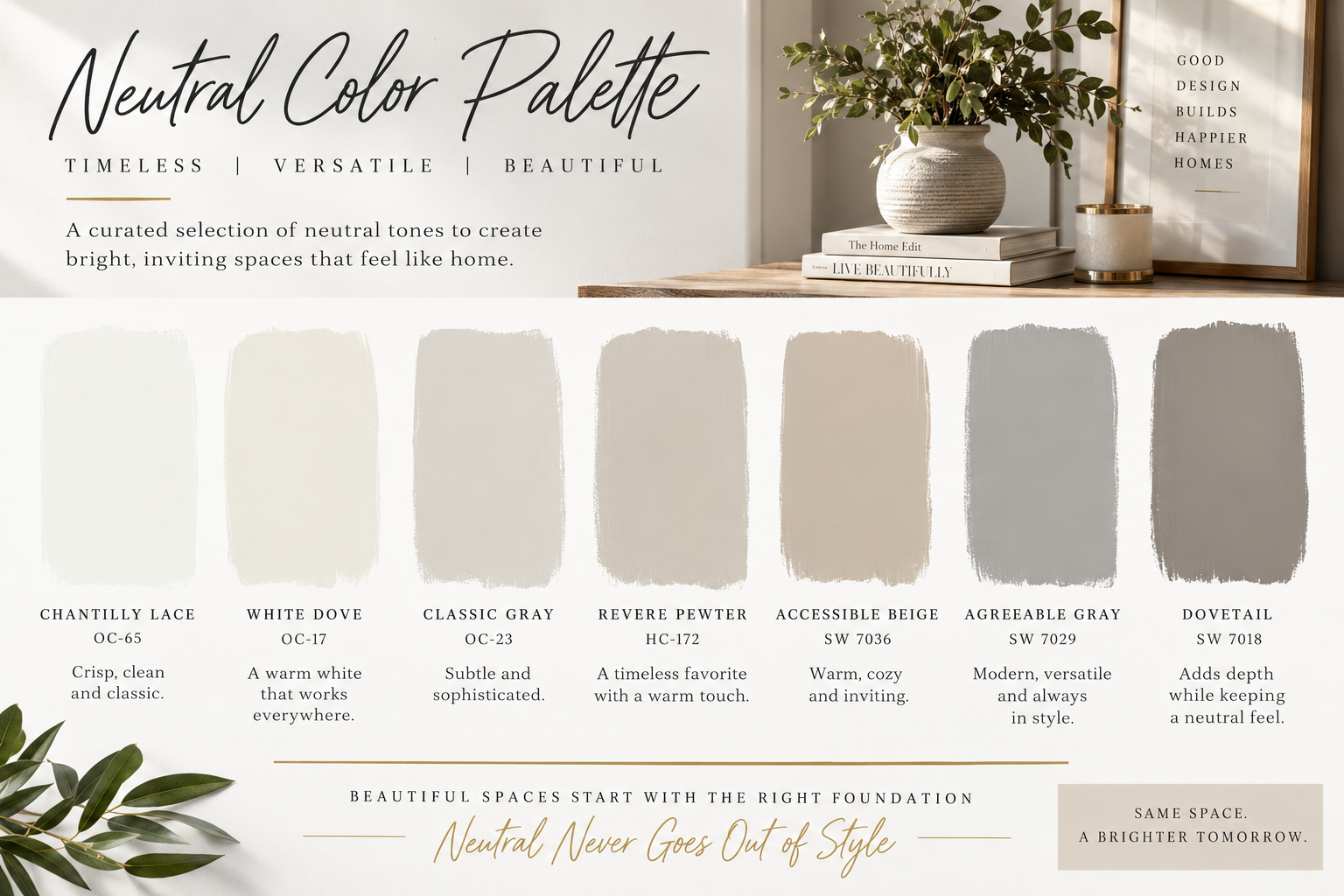
Warm whites, soft beiges, light greiges and other neutral shades give buyers a cleaner visual starting point. They can also make rooms appear brighter, larger and easier to coordinate with different furniture styles.
A neutral room allows buyers to focus on things such as the size of the bedroom, natural light, flooring, windows and layout instead of immediately thinking:
“I’m going to have to repaint this.”
And that matters.
When buyers start mentally creating a repair list during a showing, even relatively inexpensive projects can begin influencing how they feel about the entire property.
Painting before listing isn't about making a house boring. It's about removing unnecessary distractions.
But Going From a Dark Color to a Light Color Isn't “Just Paint”
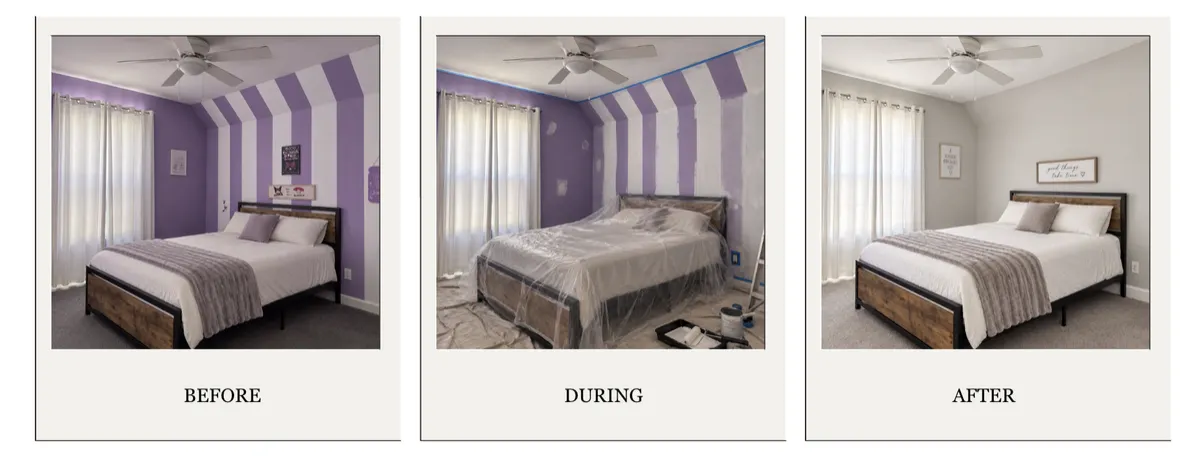
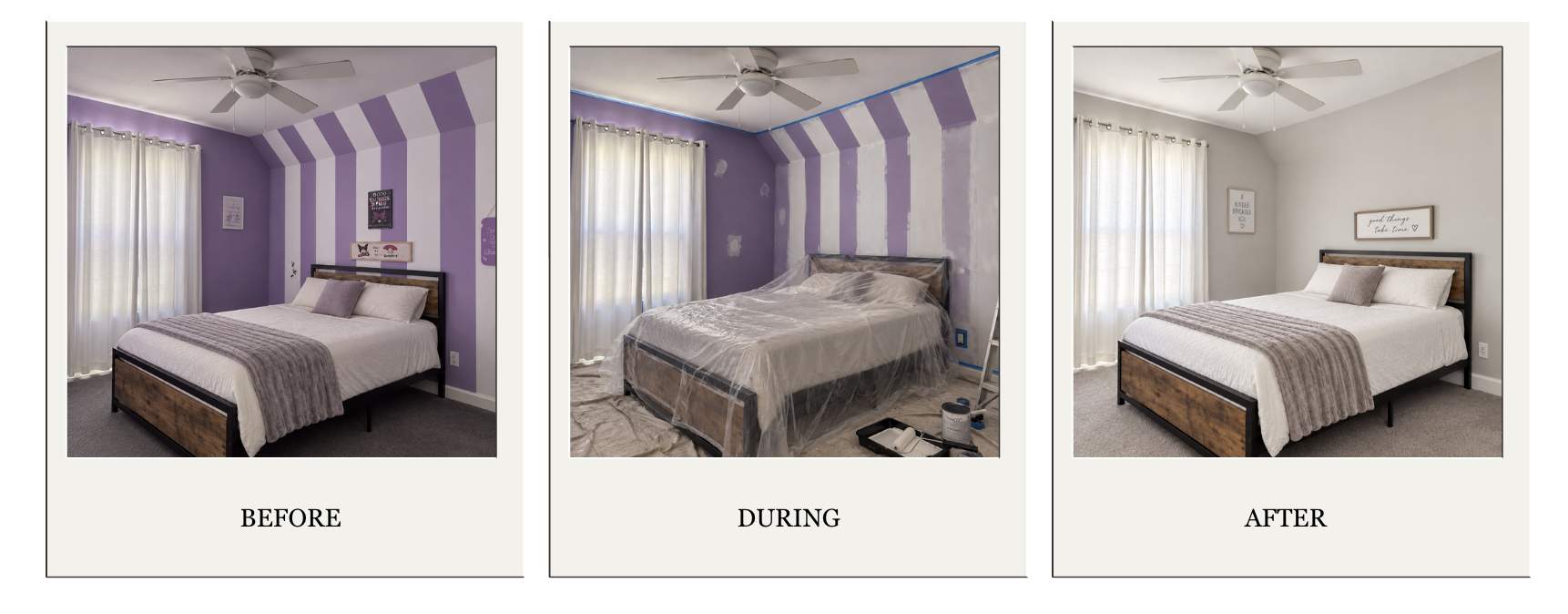
Take the bedroom pictured above.
At first glance, someone might look at the purple-and-white striped wall and think:
“Just paint it a light color.”
Technically, yes.
Professionally? There are several steps before that final color ever goes on the wall.
Step 1: Protect the Room
Before painting begins, furniture needs to be moved or protected. Floors, outlets, switches, fixtures, baseboards and other surfaces need to be covered or masked.
Professional painters spend a significant amount of time preparing a room because protecting the areas that aren't being painted is just as important as painting the ones that are.
Step 2: Inspect and Repair the Walls
Nail holes, anchors, dents, cracks, damaged drywall and previous repairs need to be addressed.
Holes may simply need spackle, while larger damage may require drywall patches, joint compound and multiple applications.
Repairs then need time to dry.
Step 3: Sand the Surface
Striped walls can create another issue.
Depending on how the stripes were originally painted, there may be slight paint ridges where tape lines were located. Painting directly over those edges can leave the old stripe pattern visible through the new finish—even though the color itself has disappeared.
Those areas may need to be sanded or skim-coated to create a smoother surface.
Step 4: Clean and Prepare the Walls
Dust from sanding has to be removed before primer or paint is applied.
Walls may also need cleaning if there is dirt, grease, residue or other contamination that could interfere with paint adhesion.
Step 5: Prime the Dark Colors
This is one of the most important steps when changing a dark or saturated color to a light neutral.
Trying to cover dark purple with inexpensive white paint alone can mean applying coat after coat and still ending up with an uneven finish.
A quality high-hide primer helps neutralize the existing colors and creates a more consistent surface for the new paint.
Depending on the original color and the condition of the wall, one or even two primer coats may be necessary.
Step 6: Apply the New Wall Color
Once the surface is properly prepared and primed, the finish paint can finally be applied.
A professional-looking transformation will generally requiretwo finish coatsof quality paint.
That means a wall that looks like a “one-coat project” might actually receive:
prep + repairs + sanding + primer + possibly a second primer coat + two finish coats.
That's why professional painting estimates aren't based simply on the cost of a gallon of paint.
So How Much Does It Cost?
Every property is different, but homeowners preparing a typical bedroom for resale can use these numbers as a general planning guide.
For a relatively simple bedroom with minimal repairs and a basic color change, professional painting might fall around $900–$1,500.
For a room with dark colors, stripes, multiple repairs, extensive preparation or several coats of primer and paint, the project could be approximately $1,200–$2,000 or more.
If ceilings, doors, closets, baseboards and trim are also being painted, or there is significant drywall repair, a complete room transformation may reach $1,500–$3,000+.
A single accent wall may cost considerably less often approximately $350–$750—but again, preparation can change the price dramatically.
These are planning ranges, not quotes. Wall condition, ceiling height, room size, paint quality, repairs and the amount of protection required all affect the final price.
Don't Spend Money Where Buyers Won't Appreciate It
When preparing a home for listing, the objective shouldn't be to remodel everything.
The objective is to identify the improvements that will make the property feel cleaner, brighter and better maintained without throwing money at projects that won't improve the buyer's perception of the house.
Paint is one of those improvements that can have an immediate visual impact.
And sometimes simplifying a room is exactly what it needs.
The purple striped bedroom above may have been perfect for the person who lived there. But for the next homeowner, a fresh neutral palette creates a blank canvas.
That's what we're trying to accomplish before those listing photos are taken.
Work With Professionals Who Understand the Preparation
Blue Ribbon Home Improvement Concierge works with trusted professionals who can help homeowners prepare their properties for sale, complete repairs and tackle home improvement projects without having to figure out every trade on their own.

For professional painting services, visit Sonia Garcia owner of Palatable Painting:
Palatable Painting – Sonia Garcia on Facebook
And if you're preparing your home for sale and aren't sure what should be repaired, painted or addressed before listing, Blue Ribbon can help you determine your next steps and get the right professionals involved.
Visit Blue Ribbon Home Improvement Concierge on Facebook
Blue Ribbon Home Improvement Concierge
San Antonio and surrounding areas
Call Blue Ribbon Today (830) 470-1137