How Much Should I Budget for Unexpected Surprises During a Home Remodel?
How Much Should I Budget for Unexpected Surprises During a Home Remodel?
The short answer: plan for an extra 10% to 20% on top of your remodeling budget. For older homes, or any project that changes the layout, lean toward 20%.
That number can feel like a lot until you see what's hiding behind the walls. And sometimes the most valuable surprise is the one you find before anyone picks up a hammer.
The Garage Conversion That Revealed What Was Behind the Walls
A San Antonio couple called us with a goal we hear often: they wanted more space.
Their home was built in 1968, about 1,050 square feet, with a narrow galley kitchen and a one-car garage used mostly for storage. Their idea was to open the kitchen into the garage, creating a larger kitchen plus a dedicated laundry and pantry room with room to breathe.
On paper, it made perfect sense. The space was already there. It just needed to be put to better use.
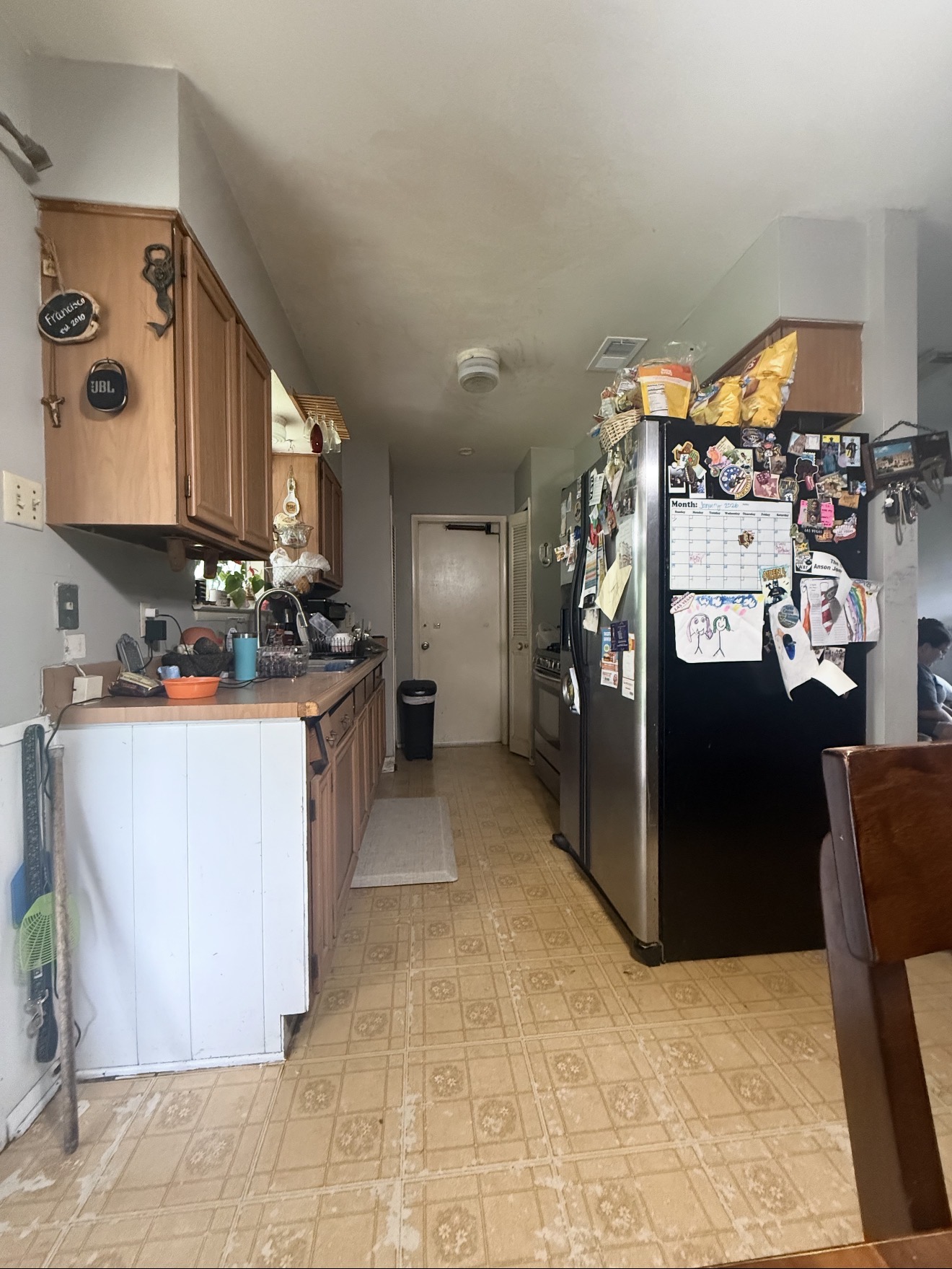
Caption: The existing galley kitchen the homeowners hoped to convert.
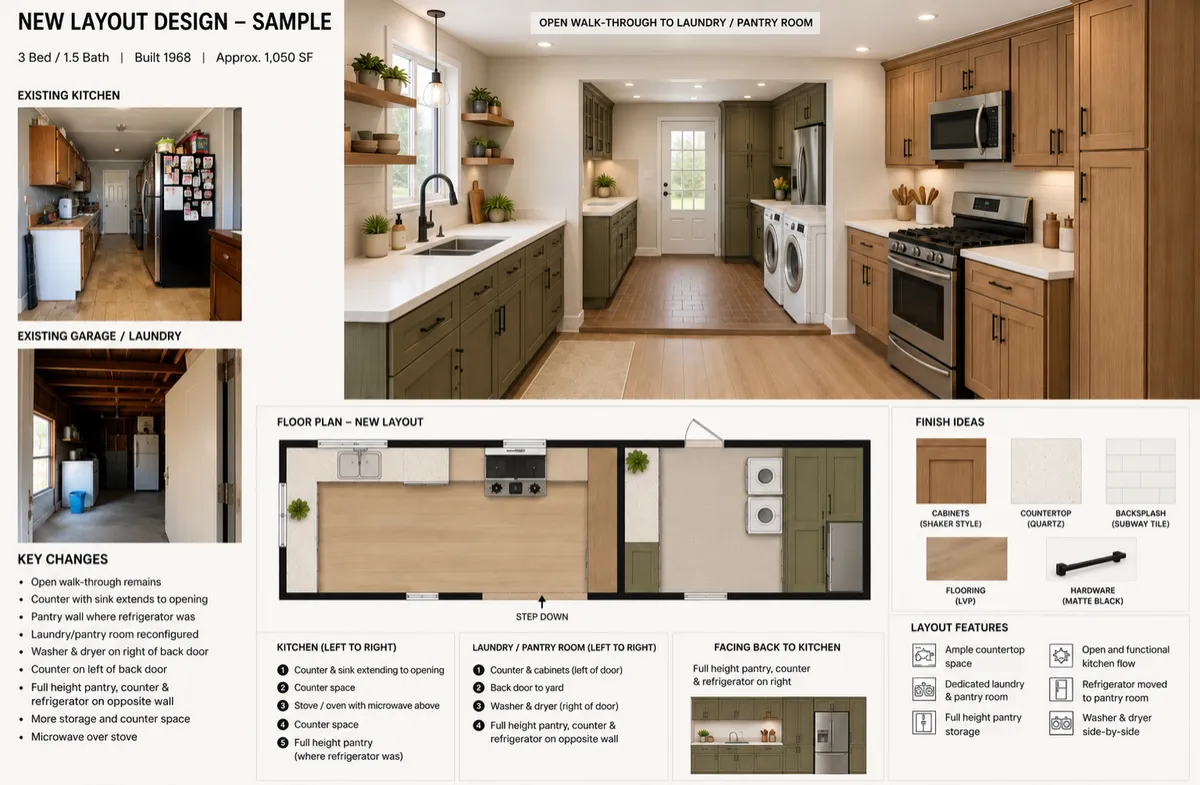
We designed a concept that kept an open walk-through, extended the counters and added a full-height pantry, moved the washer and dryer into a new laundry and pantry room, and gave the family far more storage and counter space.
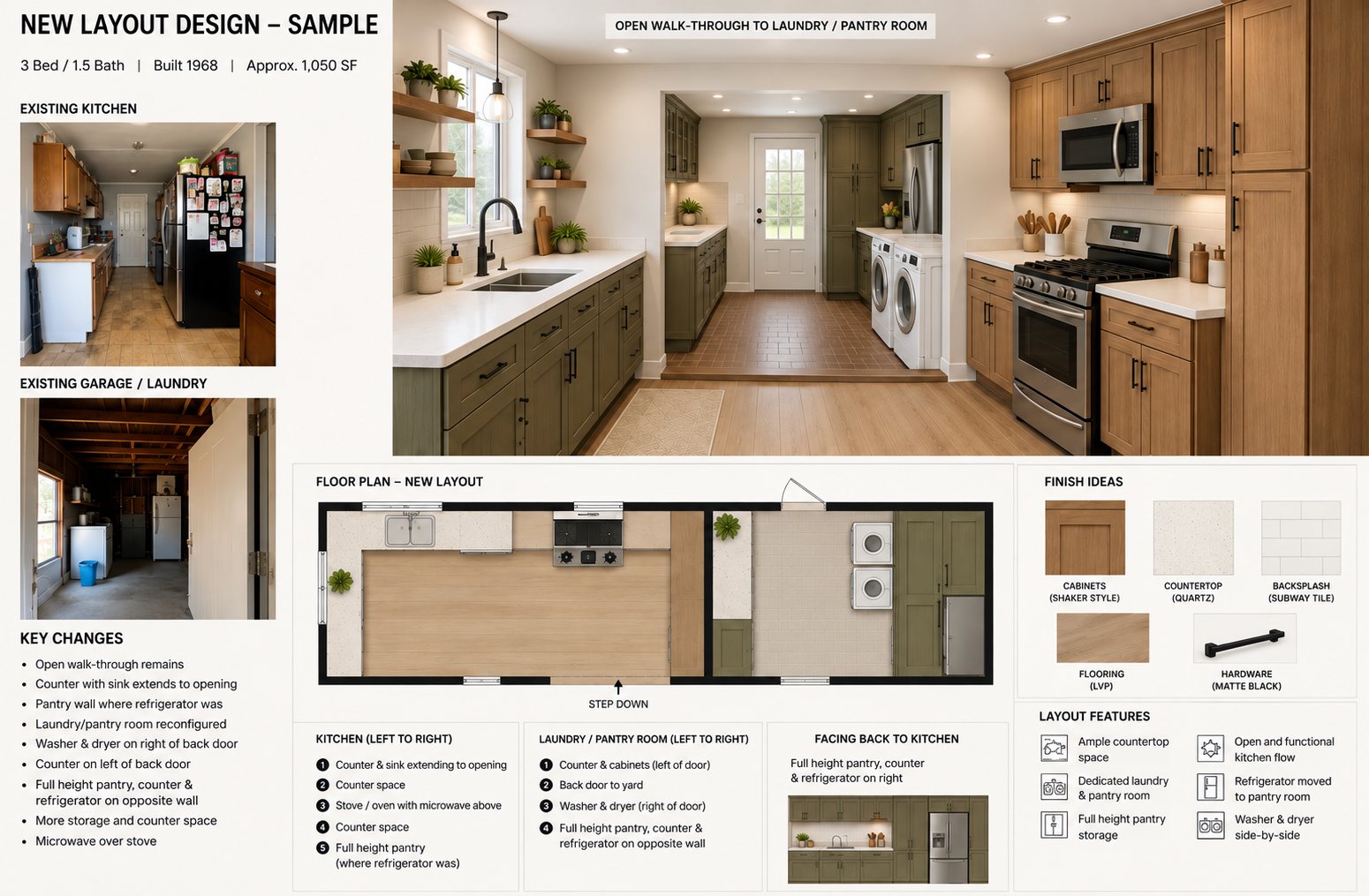
Caption: The design concept we presented, with the kitchen extended into a new laundry and pantry room.
Then came the most important step, the one many homeowners skip: we walked the house with an electrician, a plumber and a foundation contractor before any work was quoted.
What the Estimate Uncovered
The final estimate came to $66,000, much more than the homeowners had hoped. Here's where that number came from.
Electrical came first. The home was still running on its original outdoor electrical panel: small, rusted, with handwritten labels and a section covered in duct tape. A system designed for a 1960s household simply wasn't built to carry a modern kitchen, new appliances and a laundry room. Before the new space could be built, the electrical service needed a major upgrade.
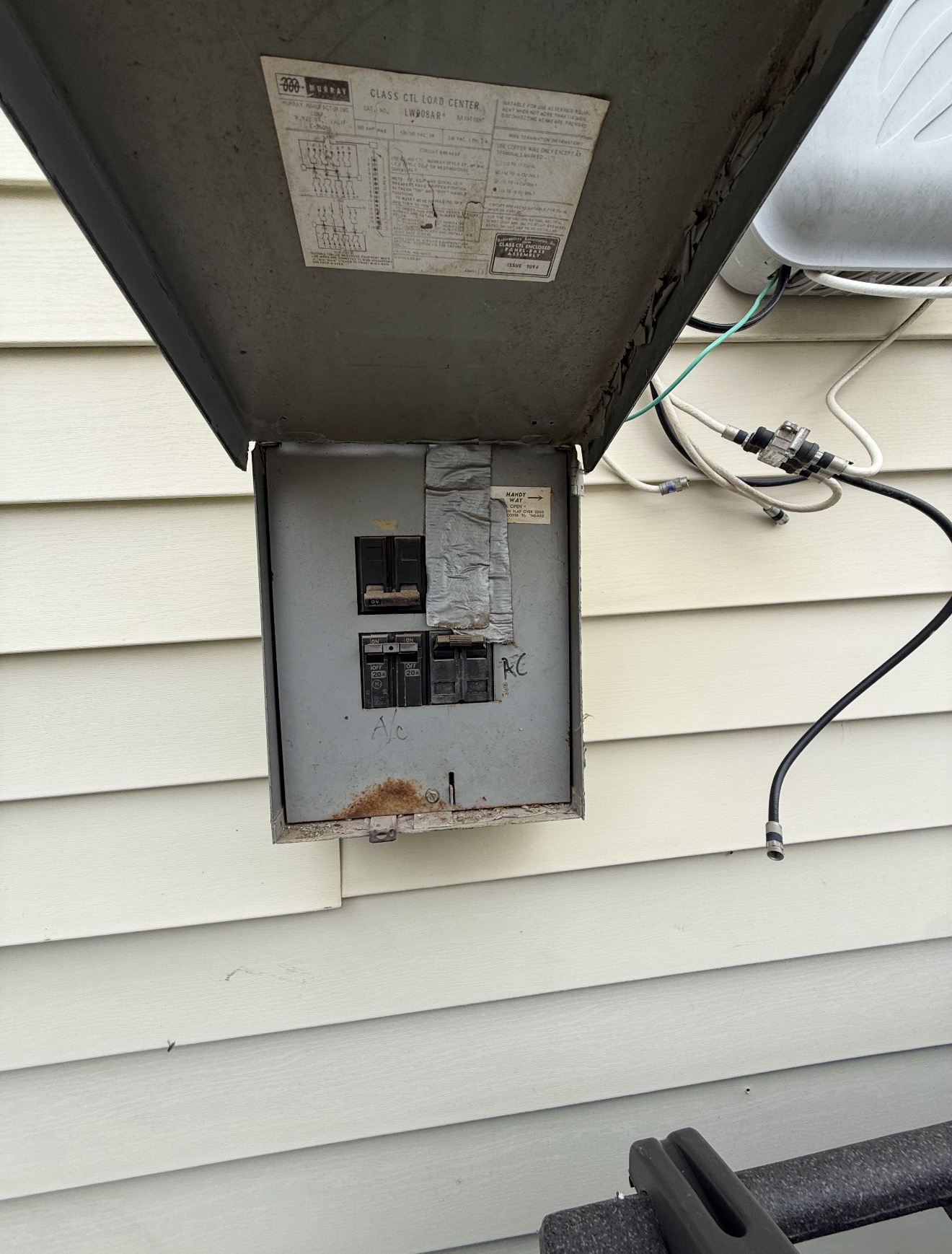
Caption: The original outdoor electrical panel. It needed a full upgrade before a modern kitchen could be added.
Plumbing was close behind. Moving the washer and dryer and extending the kitchen meant running new water and drain lines through decades-old plumbing that needed updating to handle what the homeowners wanted.
Then the foundation. Garage slabs usually sit lower than the rest of the house and aren't built the same way as living-space floors. Joining the two required foundation modifications, and even the final design kept a step down into the new laundry room because of the difference in slab height.
None of these were luxury upgrades. Most of the $66,000 went to things the homeowners would never see once the walls were closed.
Why Waiting Was the Right Decision
The homeowners decided to wait and save before moving forward.
That may sound like a disappointing ending. It isn't.
Imagine the other version of this story: they hire someone for a quick cosmetic quote, demolition starts, and then the electrician opens the panel. Now they're facing a five-figure change order with their kitchen torn apart, their garage half-framed and no way to stop.
Instead, they found every major cost on paper, with their home intact and all their options open. That's the real purpose of planning for surprises: finding them while you can still make a choice.
What Is a Remodeling Contingency Fund?
A contingency fund is money set aside for conditions nobody could see when the estimate was written, such as water damage inside a wall, rotted framing or wiring that isn't safe to reconnect.
Think of it as insurance for your budget. It's not money you plan to spend, but money you'll be very glad to have if you need it.
How Much Should You Budget?
Cosmetic remodels (paint, flooring, cabinets, countertops): 10%
Example: $30,000 project → $3,000 contingency
Kitchen and bathroom remodels: 15%
These rooms involve plumbing, electrical and ventilation, so they're more likely to uncover problems.
Example: $75,000 project → $11,250 contingency
Whole-home renovations, older homes or layout changes: 15–20%
If your home is more than 25–30 years old, or you're removing walls or converting a space like a garage, expect the higher end.
Example: $150,000 project → $22,500–$30,000 contingency
Even a thorough estimate like the $66,000 one above should still carry a contingency. Pre-construction evaluations catch the big issues, but some things only show up once the walls are open.
What Might Be Hiding in Your Home, by the Year It Was Built
If your home was built… | Watch for |
|---|---|
Before 1978 | Lead-based paint, which requires lead-safe work practices; possible asbestos in older ceilings and flooring |
Before the 1970s | Cast iron drain lines that corrode and crack over time; undersized electrical panels |
Mid-1960s to early 1970s | Possible aluminum branch wiring |
Late 1970s to mid-1990s | Polybutylene (gray plastic) water lines known for leaks |
Any age in the San Antonio area | Foundation movement from expansive clay soil; termite damage |
This doesn't mean your home has these problems. It means they're worth checking before you set your budget.
What Happens When a Surprise Is Found Mid-Project?
Even with good planning, you should know what the process looks like:
Work pauses in that area, and the problem is photographed.
The contractor explains the issue and your options, ideally in writing.
You approve a written change order before work continues.
The cost comes from your contingency, not from your finishes budget or your savings.
A $5,000 decision shouldn't be made alone, standing in a dusty kitchen, in five minutes. When a wall opens at a Blue Ribbon project, we're there to help you understand what you're looking at and what your options are.
What Your Contingency Is Not For
Upgrading to quartz halfway through the project isn't a surprise. It's a choice.
Keep upgrades and "while we're at it" additions in a separate line of your budget. Your contingency only works if it's still there when something real turns up. If you finish with money left over, it's yours to keep, or to spend on that upgrade after the project is safely complete.
How Blue Ribbon Helps Homeowners Avoid Costly Surprises
Our goal isn't just to get a project built. It's to help homeowners make smart decisions before construction starts.
We coordinate experienced professionals who evaluate your home's electrical, plumbing, HVAC and structure early, so the big questions get answered on paper instead of in the middle of demolition.
Sometimes that means a project moves forward with confidence. Sometimes, like the garage conversion above, it means waiting until the timing is right. Either way, the homeowner makes the decision with full information.
For more on how scope drives cost, read how much a kitchen remodel really costs in San Antonio.
People Also Ask
How much contingency should I budget for a home remodel?
Set aside 10–20% of your total budget. Cosmetic projects may need only 10%, while older homes, kitchens, bathrooms and layout changes are better planned at 15–20%.
Why do remodeling projects go over budget?
Most often because of conditions hidden until demolition, such as outdated wiring, plumbing leaks, water damage or structural issues, plus upgrades added along the way.
Is it expensive to convert a garage into living space?
It can be, especially in older homes. Beyond framing and finishes, garage conversions often require electrical service upgrades, new plumbing and foundation work to bring the space up to living-area standards.
How can I avoid unexpected remodeling costs?
Have your home's major systems evaluated by qualified trades before setting your budget, get a detailed written scope, and keep a separate contingency fund.
Planning a Remodel? Find Out What's Behind Your Walls First.
Before demolition starts, let us walk through your home with the right professionals, so your budget matches your home, not just your wish list. Your first consultation is free.
Not ready yet?
→ Download the free Homeowner Protection Checklist
📞 Prefer to talk now? Call Carla at (830) 271-5050